Why Products With Insect-Based Protein?
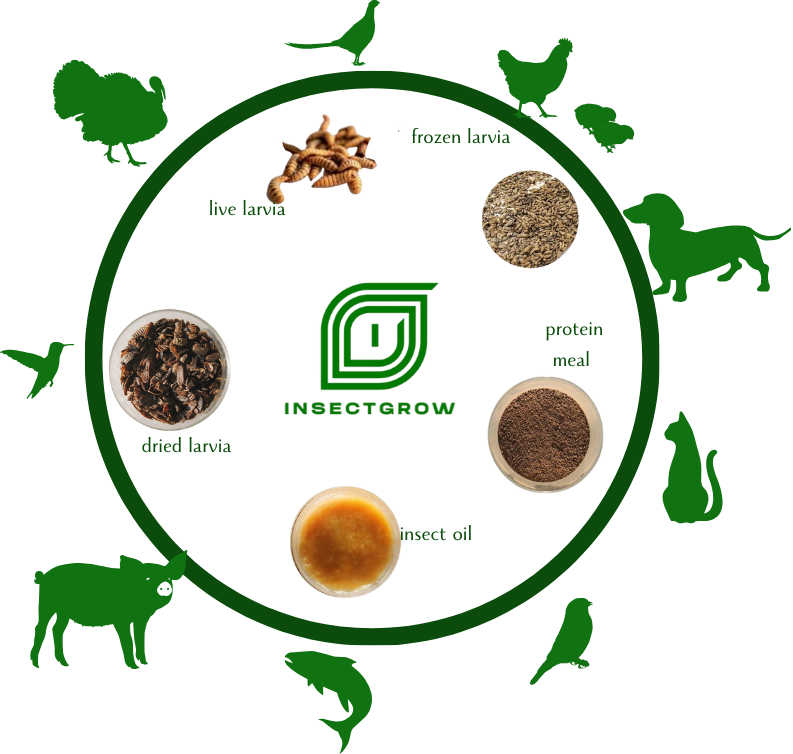
In today's demanding agricultural landscape, optimal nutrition is paramount for healthy growth, efficient production, and sustainable practices. We understand this need, which is why we are championing the power of insect protein as a superior feed ingredient. Our goal is to actively participate in the distribution and commercialization of high-quality insect flours, oils, and other derivatives.


→
→
High Protein Content
Insect protein has a remarkably rich protein profile. This high concentration of easily digestible protein provides essential growth and overall vitality in poultry, aquaculture, and more. By incorporating high protein into your feed formulations, you are directly investing in the robust health and productivity of your population.
Essential Amino Acids
In addition to protein quantity, protein quality is equally important. Insect protein has a complete spectrum of essential amino acids, the vital components that organisms cannot produce themselves and must obtain from their diet.
Improved digestibility
Insect protein's high digestibility guarantees that populations can effectively absorb and use the important nutrients it offers. This improved digestibility translates into better feed conversion rates, meaning you get more nutritional benefits from less feed. This not only supports their health but also contributes to the cost-effectiveness of your feeding programs.
Environmental Sustainability in Protecting Our Planet
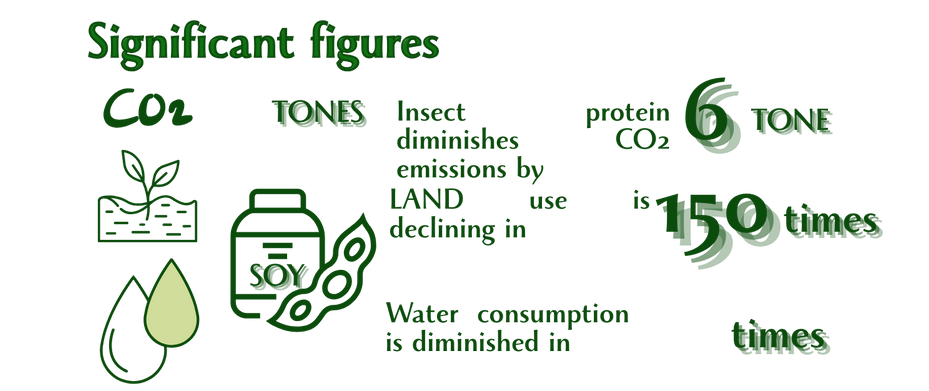
Choosing insect protein feed is a conscious step toward a more sustainable future. Insect farming requires significantly less land and water than traditional protein sources such as soy or fishmeal. It also produces significantly lower greenhouse gas emissions, making it an environmentally responsible choice that meets growing consumer demand for sustainable practices.
Importantly, the process of raising these larvae also produces a valuable by-product known as frass. This frass, which is essentially the excrement produced by the larvae, is a fantastic, nutrient-rich natural fertilizer. Its use in crop production not only provides an excellent organic alternative to synthetic fertilizers but also contributes to a circular economy, further minimizing waste and reducing the environmental impact of both feed production and agriculture.
Natural and Safe
Insect protein is a natural and inherently safe feed ingredient for a wide range of animals. Our products adhere to stringent quality standards, ensuring a pure and wholesome product free from harmful additives. You are opting for a natural approach to animal nutrition, promoting the health and well-being of your population.
Support Immunity and Resilience
Emerging research suggests that insect protein may offer additional health benefits for animals, including the potential to boost their immune systems and increase their resilience to disease. While ongoing studies continue to explore these exciting possibilities, incorporating feed insect protein can be a proactive step in supporting overall health.


The environmental sustainability and scalability of traditional animal husbandry are key concerns in meeting global protein needs. At InsectGROW, we promote the spread and leverage innovative technology for sustainable and efficient insect protein production. Our insect-based feed solutions are designed to directly tackle these challenges, contributing to a more sustainable future for the feed industry and beyond.
Significance


of global carbon dioxide emissions are associated with the food industry
24%
5%
a portion of global CO2 emissions is attributed to food transportation.
80%
of arable land utilized for cultivating livestock feed and grazing
50%
90%
ecosystem productivity is utilized for food production.
of the world's wild fish stocks are at risk due to overfishing or have already been depleted
2
million hectares
South America experiences annual deforestation as a result of the expansion of soybean agriculture.
Challenges facing the EU
by 2030
Reduction of CO2 emissions required
45%


European agricultural practices should transition to organic methods
50%
30%
Methane emissions must be reduced by a minimum of


Demand for insect protein is anticipated to surpass supply by a factor of six.
6X
Simultaneously, the world confronts several significant challenges, including a projected rise in the global population to 9.7 billion, an anticipated increase in meat consumption exceeding 50%, heightened resource utilization to guarantee food security, and a rapid escalation in CO2 emissions by 60%.
In response to these challenges, conscientious producers are diligently advancing and applying innovative technologies to enhance and expand insect protein production.
Our company provides advanced technological solutions for implementation, specifically insect protein products that are more effective, sustainable, and capable of meeting the increasing global demand for protein.
Ensuring the safety and sustainability of food through insect biotechnology.

EU Regulatory Framework for Insect Protein in Feed


The path for insect proteins to enter new animal feed markets was significantly cleared with their authorization for use in aquaculture feed in 2017. This regulatory development was underpinned by scientific assessment.
In its scientific opinion issued on October 8, 2015, the European Food Safety Authority (EFSA) concluded that the potential for microbiological hazards in insect protein sources was considered comparable to that found in other unprocessed animal protein sources.
Download the EFSA opinion: "Risk profile related to production and consumption of insects as food and feed," - October 8, 2015
This pivotal EFSA opinion served as the basis for revising the regulations that previously restricted the use of animal proteins in livestock feed. Consequently, Regulation No 999/2001 (Annex IV) was amended by Regulation 2017/893 (Annex X), effectively permitting the inclusion of protein derived from seven specific insect species in feed for aquaculture, poultry, and pigs. The initially approved species include the Black Soldier Fly (Hermetia illucens), Common Housefly (Musca domestica), Yellow Mealworm (Tenebrio molitor), Lesser Mealworm (Alphitobius diaperinus), House Cricket (Acheta domesticus), Banded Cricket (Gryllodes sigillatus), and Field Cricket (Gryllus assimilis).
(Note: As of November 2021, EU legislation concerning animal by-products, specifically Regulation (EU) 2021/1925, further expanded the list of permitted species by allowing processed animal proteins (PAPs) from the silkworm (Bombyx mori) in aquaculture, poultry, and pig feed, bringing the total to eight authorized species.)
Information presented here is based on material from IPIFF.

See the original resource for full details:
SMALL SOURCE BIG IMPACT
Discover the Benefits of Sustainable and High-Protein Insect-Based Protein Feed Solutions Today.
Contact:
+359 88 541 1919
© 2025. All rights reserved.